


Autumn’s Palette: The Why and How of the Fall Leaf
Why Leaves Change Color and How to Take Care of Them Sustainably This Fall
By Jason Samuel, Camp Director
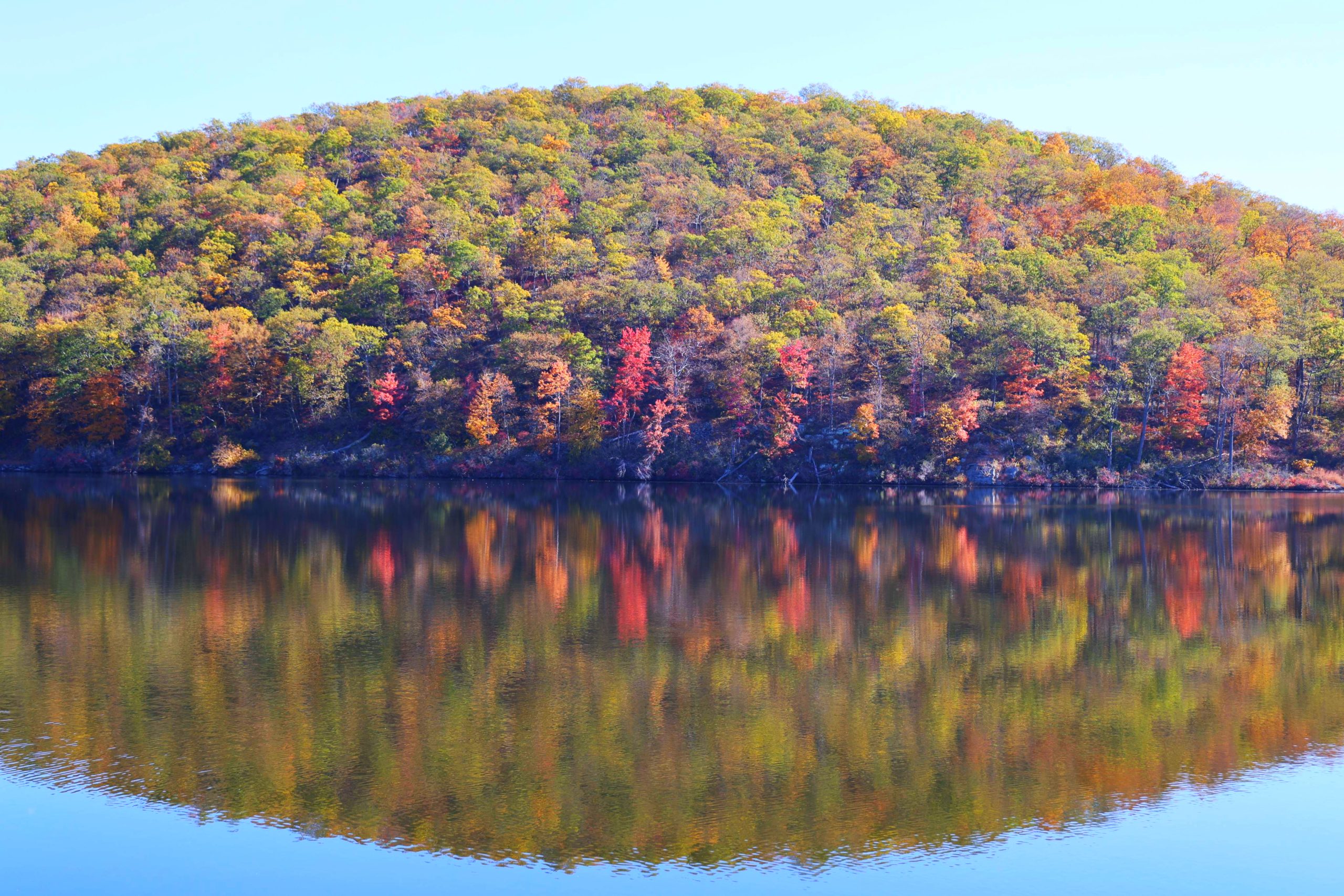
As summer segues to fall, our landscape transforms into a living canvas painted with the vibrant hues of fall leaves. The falling leaves give us more reasons to explore the rhythms of nature beyond the fall staples of pumpkin spice, puffy vests, and candy corn. These wonderful colors are not just a picturesque sight; they play a vital role in the ecosystem and offer valuable lessons in sustainability.

The transformation of the trees starts as daylight decreases and temperatures drop. The trees prepare for winter by halting the production of chlorophyll, the green pigment essential for photosynthesis. This chlorophyll breakdown process reveals the yellows and oranges of carotenoids and the reds and purples of anthocyanins, resulting in the breathtaking autumn palette we cherish. Different trees are known for their colors. Maple trees, which give us the wonderful sap that creates maple syrup, also wow us with some of the best fall foliage. Maples are known for their bright reds and oranges. Oaks, on the other hand, have deep reds and purples but are often more muted than maples. After the colorful display of nature’s beauty runs its course, the trees shed their leaves. They do this to conserve water and energy during the winter months. This process is called abscission, where a layer of cells forms at the base of the leaf stem, eventually causing the leaf to detach. Beach trees keep their dead leaves throughout the winter, only losing them when new growth pushes them out in the spring. Beach trees are quite a sight in the winter, with their forever golden leaves the only foliage rustling in the winter wind. There are many beach trees throughout Harriman State Park, and they offer a striking sight in the desolate winter landscape.

The environmental benefits continue once the leaves have turned and the trees shed them. Fallen leaves serve as a crucial component of the life cycle of nature. In the forest, fallen leaves act like natural mulch. They cover exposed soil and act as an erosion control for the fall rains and winter snow. The moisture also helps them decompose over time, enriching the soil with nutrients and supporting microbial life. This process promotes the health of the forest ecosystem, aiding the growth of new plants in the spring. Fallen leaves also create a habitat for a variety of wildlife.
Fallen leaves around houses and in the city are also a resource if treated as such. There are many reasons to leave leaves in place, including not having to listen to noisy leaf blowers. Instead of being discarded as waste, there are many climate-smart solutions. The first is just to “leaf” them be. Let the leaves cover the ground as they would in more natural spaces. If this isn’t an option, try raking the leaves into the wooded margins of the yard if available. This allows the same important benefits as they would be in the forest: soil control and insects and small creatures protected habitat over the winter. The next option would be to rake leaves and branches into a scrub pile to provide winter cover for birds and small animals. If keeping the leaves whole isn’t an option, try mulch mowing the leaves on the lawn and give the grass a free over-winter fertilization. Or mulch mow and collect them in the bag on your mower to mulch landscape beds. Finally, if none of the above options work for you, and you can’t have a Family-Rake-and-Jump-in-Piles Day, use electric or battery-powered blowers to gather the leaves and make sure they go to compost. Many municipalities take leaves as compost, as long as they are bagged in brown paper compostable bags. Whatever you do, please do not bag them in plastic bags and send them to the landfill.

Fall invites us to slow down and reflect on nature’s rhythms. As we admire the beauty of changing leaves, we are reminded of the importance of biodiversity and the interdependence of all living things. Seasonal change encourages us to consider our own impact on the environment.
Venturing out during this season can inspire a deeper connection with nature. Educating ourselves and others about the ecological significance of the fall can help us consider our impact on the environment and how we can be better stewards of our planet.
As we embrace the stunning beauty of fall, let’s also recognize the lessons it imparts. The vibrant colors of falling leaves remind us of nature’s resilience, the importance of sustainable practices, and how interconnected everything is in nature. This fall, take a moment to appreciate the artistry of nature and consider how you can contribute to a healthier planet. Every leaf that falls holds a story of renewal and regeneration—one that we can all be a part of.